Bermuda vs. St. Augustine in East Texas: Which Fits Your Yard
Two grasses cover most of the lawns out here. Pick the wrong one for your yard and there's no fertilizer, no watering schedule, and no amount of money that fixes it. Here's how we decide.
I get asked this on half the yards I walk. Somebody's lawn is thinning out, going patchy under the trees, or just never looked right since they sodded it, and they want to know what grass to put down.
Almost every answer in East Texas comes down to two grasses: bermuda and St. Augustine. They're both warm-season grasses, they both love our summers, and that's about where the similarities stop.
The single biggest factor isn't price, and it isn't looks. It's sun.
Bermuda is a sun grass. Full stop.
Bermuda needs a minimum of six to eight hours of direct sun a day, and it wants more. Give it that and it's the toughest lawn you can own out here.
It handles heat better than anything. It takes foot traffic, the kids, the dogs, a trampoline that moves twice a summer, and recovers fast because it spreads by runners both above and below ground. It's drought-tough. And you can mow it low and tight for that clean, almost-striped look people want.
The catch is the flip side of all that. Bermuda will not grow in shade. Not "grows slowly." It quits. Put it under a pine canopy or on the north side of a two-story house and it thins to dirt by August no matter what you feed it. It also goes fully dormant and brown in winter, and it's aggressive: it'll creep into your flower beds and your neighbor's yard if you let it.
Bermuda is right when: your yard is open and sunny, you've got pets or kids beating it up, and you want a low, dense, drought-tough lawn you can mow short.
St. Augustine is the shade grass.
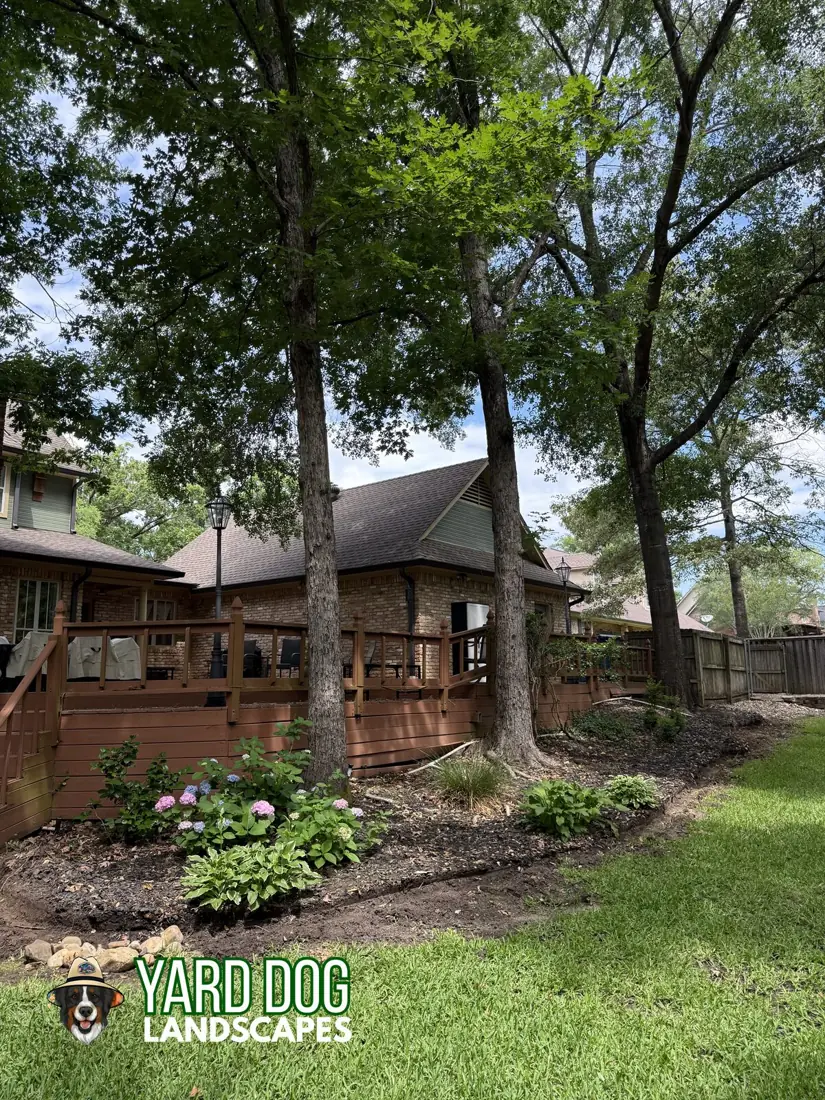
St. Augustine is the only common warm-season grass around here that takes real shade. It'll hold on with four to five hours of sun, even some filtered light under hardwoods. In a part of Texas covered in pines and oaks, that matters. A lot of Longview lots simply don't get enough sun for bermuda.
It's a wide, coarse blade with a deep blue-green color, and a thick St. Augustine lawn looks lush in a way bermuda doesn't. It spreads by above-ground runners, so it fills in quickly when it's happy.
But it's softer in every sense. It doesn't take heavy foot traffic; wear paths show up and don't bounce back like bermuda. It drinks more water in the dead of summer. It can't be mowed low; cut it under three inches and you scalp it. And it's the grass that gets the diseases people call me about: brown patch in the fall, gray leaf spot in the heat, and chinch bugs that can flat-out kill a sunny stretch of it in a couple weeks.
St. Augustine is right when: you've got trees and shade, you want that thick carpet look, and the yard isn't a high-traffic playfield.
The mistake I see most.
People sod bermuda in a shady yard because it's cheaper and they've heard it's tough. Then they spend two years and a small fortune fertilizing a lawn that was never going to make it under those trees.
Tough doesn't beat shade. If the sun isn't there, bermuda loses every time. I'd rather tell you that on the front end than watch you pour money into it.
The reverse happens too: St. Augustine in a blazing, wide-open yard with a dog. It'll survive, but you'll fight wear paths and water bills you didn't need to.
Most East Texas yards are a split.
Here's the part nobody wants to hear: a lot of properties shouldn't be one grass. The sunny front is perfect for bermuda. The shaded back under the oaks wants St. Augustine. Trying to force one grass across both ends is how you end up with half a lawn that always looks rough.
When we sod or renovate a yard, we map the sun first, where it actually falls, hour by hour, this time of year, and then we match the grass to the ground. Sometimes that's bermuda everywhere. Sometimes it's St. Augustine in the back and bermuda out front. The yard tells us; we just read it.
What to do before you buy a single pallet.
Stand in the spot you're worried about and watch it for a day, or just be honest about it: how many hours of real, direct sun does it get in summer, when the trees are full?
- Six-plus hours of sun: bermuda, and you'll love it.
- Four to six hours, dappled light: St. Augustine is the safer bet.
- Under four hours: honestly, no turf thrives there long-term. That's a candidate for a shade bed, mulch, or ground cover instead of grass you'll keep replacing.
If you're not sure, that's exactly what a walkthrough is for. We service Longview, White Oak, Hallsville, Kilgore, and Gladewater, and I'll tell you straight which grass your yard will actually grow, before you spend money on the one it won't.

Miller Maines owns Yard Dog Landscapes in Longview, TX. He has worked East Texas yards since 2017 and still walks every property himself.