Brown Patch vs. Heat Stress: How to Tell the Difference (Before You Make It Worse)
Two lawns down the same street can go brown in the same week for opposite reasons. One is drying out and wants more water. The other is a fungus that water feeds. Grab the hose for the wrong one and you finish the job the brown started.
By late June I start getting the same call on repeat. "My lawn's turning brown, I'm watering it every day, and it's getting worse." Around here that sentence is a coin flip. Half the time the grass is genuinely thirsty. The other half, the watering is the problem.
Brown patch and heat stress both end with brown grass, so people treat them the same way: more water. But they are opposite problems, and the cure for one is fuel for the other. The good news is they look different if you know where to look, and you can tell them apart in your own yard in about five minutes.
Fungus draws circles. Heat draws coastlines.
The single fastest tell is the shape of the brown.
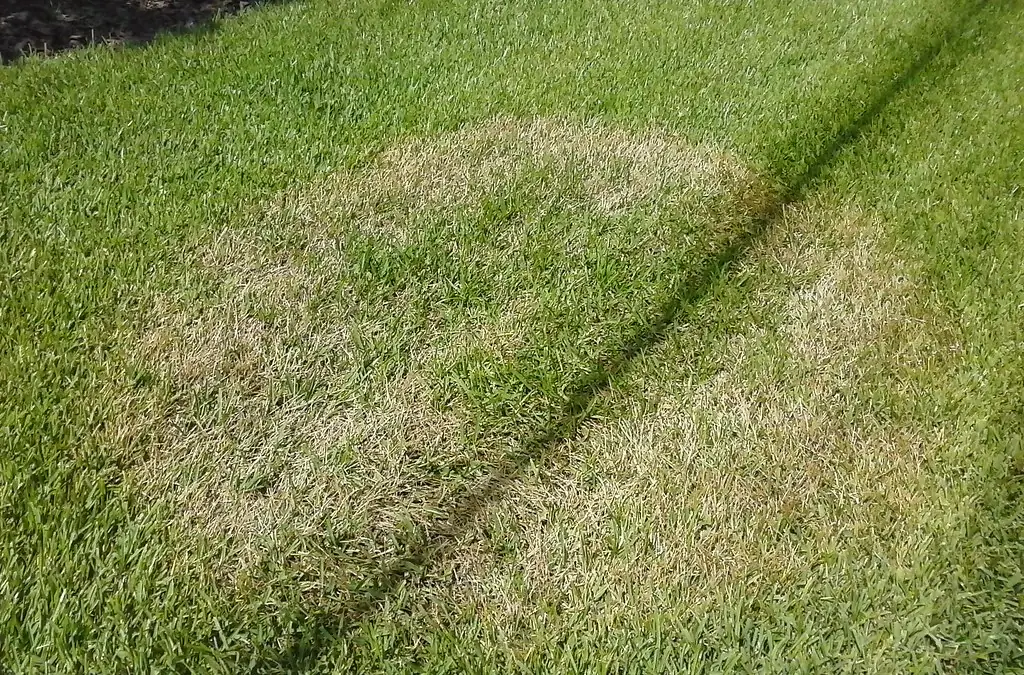
Brown patch is a soil fungus, and fungus spreads outward from a starting point, so it makes rounded shapes. You'll see roughly circular patches, sometimes a few feet across, sometimes a darker grayish ring around the edge where the disease is actively eating into the green. Now and then the middle even greens back up while the ring keeps marching out, which gives you that bullseye look. It shows up first in the parts of the yard that stay damp: low spots, heavy shade, the strip along the north side of the house, anywhere air doesn't move and dew sits late into the morning.
Heat and drought stress don't make circles. They follow the terrain like a coastline. The browning shows up on the south and west slopes that bake all afternoon, along the driveway and sidewalk where the concrete throws heat back into the grass, on the high spots that drain fastest, and in the exact arcs a sprinkler head can't reach. If your brown traces the sun and the slope instead of drawing a circle, you're looking at thirst, not disease.
The screwdriver and the tug tell you the rest.
Shape gets you most of the way. Two quick tests close it out.
First, the screwdriver. Push one into the brown area. If it slides in easy and the soil is moist or downright soggy, that's the wet, warm footing a fungus loves, and you've probably got brown patch. If it's a fight to push in and the dirt is dry and hard a couple inches down, that grass is simply parched.
Second, the tug. Grab a handful of grass at the edge of a brown spot and pull gently. Brown patch rots the blades right at the base, so they slip out with almost no resistance, and the bottom of the pulled blade looks dark, slimy, and smells a little off. Heat-stressed grass holds tight, with crowns and roots still anchored. The blades are crispy and folded, not mushy. One more drought giveaway: walk across it and your footprints stay pressed in for a while, because the blades have lost the water pressure that normally springs them back up.
What to do instead: before you change a single thing on the sprinkler timer, do the shape read plus the screwdriver and the tug. Thirty seconds of looking saves you from watering a fungus or starving a drought.
This is why watering more makes one of them worse.
Here's the trap. The instinct when grass browns is always more water. For heat stress that instinct is right. For brown patch it's the worst move you can make.
Our East Texas summers are the perfect brown patch machine: humid air, warm nights that don't cool off, and heavy morning dew. The fungus wakes up when grass blades stay wet through a warm night. Every evening you run the sprinklers, you're tucking the lawn in soaking wet for ten hours in bathwater-warm air, which is exactly the buffet the fungus ordered. So the homeowner sees brown, panics, bumps the controller to every day, and the circle doubles in a week. They did the responsible-feeling thing and accelerated the disease.
St. Augustine is the most common victim out here because it loves the same shade and moisture the fungus does, but I've pulled brown patch out of overwatered bermuda too.
What to do instead: if the tests point to fungus, cut watering back, not up. Water deeply but only when the lawn actually needs it, and run the zones at dawn so the blades dry within an hour of sunup instead of staying wet all night. Hold off on quick-release nitrogen fertilizer until it clears, because a flush of soft new growth in the middle of an outbreak is more tissue for the fungus to chew. If it's truly heat stress, then yes, water deeper, a good soak a couple times a week beats a daily sprinkle, and raise your mower a notch so the taller grass shades its own roots.
Fungicide is rarely the first answer. Patience usually is.
People expect me to say spray a fungicide and call it a day. Most of the time, on a home lawn, you don't need to.
Brown patch is uglier than it is deadly. It kills the leaf blades, not the crown and roots underneath, so once conditions dry out and you fix the watering, the lawn fills back in on its own. The damage you're staring at already happened before the ring even appeared, which is also why a fungicide sprayed the day you notice it feels like it did nothing. Those products are mostly preventive, they're pricey to blanket a whole yard, and timing them right is its own skill. For most folks the cultural fixes (less water, dawn watering, better airflow and drainage, easing off the nitrogen) do more than a bottle ever will.
For the record, we don't spray chemicals on lawns. What we do is fix the conditions that grow the fungus in the first place: opening up airflow, sorting out drainage in the soggy low spots, dialing in mowing height, and getting the watering schedule off the setting that's feeding the problem. If a stubborn case has you wanting a product, your county AgriLife Extension office can point you to the right active ingredient and the right window, but in my experience the homeowners who just dry it out and wait are usually the ones whose lawns bounce back cleanest.
So before you do anything this week, read the brown. If it's a circle in a soggy low spot, back off the water and let it ride. If it's crisp edges chasing the afternoon sun, give it a deep drink. I diagnose this every summer across Longview, Hallsville, White Oak, Kilgore, and Gladewater, and the lawns that recover fastest are the ones whose owners figured out which problem they actually had before they reached for the hose.

Miller Maines owns Yard Dog Landscapes in Longview, TX. He has worked East Texas yards since 2017 and still walks every property himself.