The East Texas Fertilization Window Most Homeowners Miss
Most people fertilize too early or too late. The May window is short, and almost everybody blows right through it.
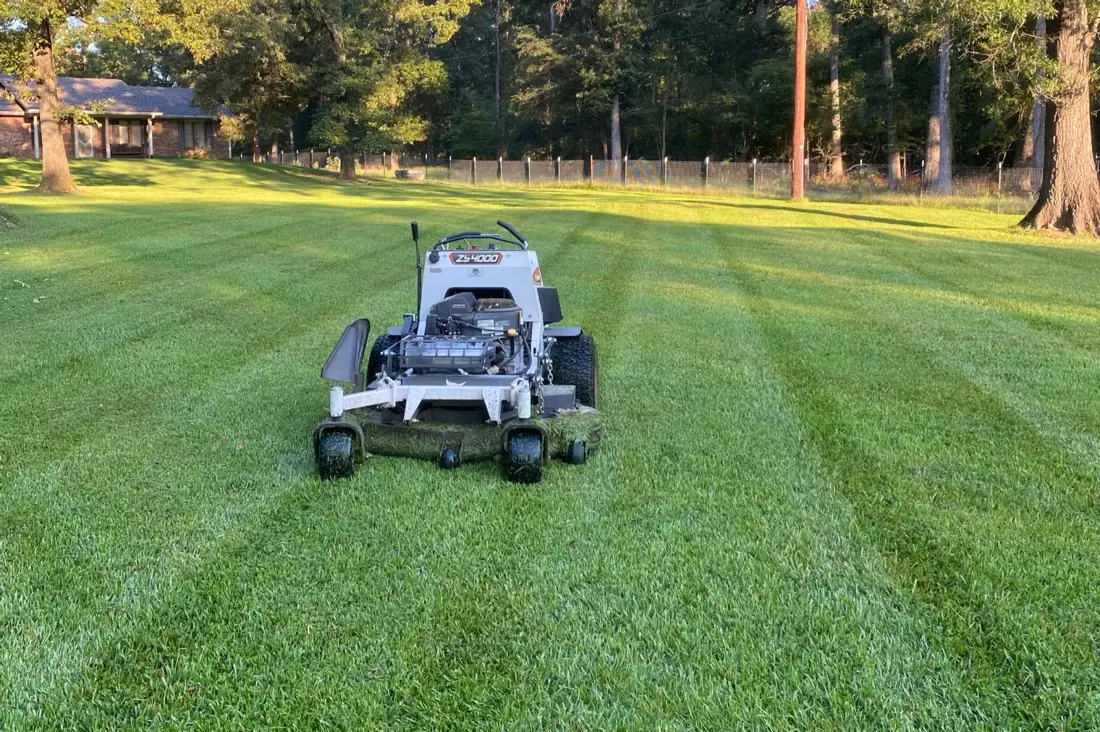
Every year I get the same question in late June: "Why does the neighbor's yard look greener than mine? I fertilized too."
Nine times out of ten, the answer isn't what they put down. It's when.
The myth: feed in March, you're set.
Every big-box store hangs the fertilizer pallets out front the second the temperatures touch 60. Folks see them and figure it's time.
The problem: bermuda and St. Augustine are still half-dormant in March. Soil temps in Gregg and Harrison counties don't hit 65°F until mid-April. Below that, the grass roots can't pull nitrogen out of the soil, and what they can't pull either washes out with the next rain or feeds the weeds, which are ready to grow.
Fertilize in March and you mostly feed your dandelions.
The real window: late April through May.
Once we get a couple of warm nights in a row, overnight lows holding above 60, the grass wakes all the way up. Roots start moving. Nitrogen actually goes into the blade. The yard greens up fast.
That window in East Texas is usually open from about April 25 to the end of May. After that, we start running into 90-degree afternoons, and pushing a heavy feed into a stressed lawn does more harm than good.
What to put down: a slow-release with around 24-0-11 or similar. Slow-release is the key word. Fast-release fertilizer dumps everything in two weeks and the grass burns through it before summer even shows up.
The mistake I see most: spring shotgun, then nothing.
People throw down one heavy bag in late April and call it done for the year.
That feeding is gone by mid-June. The grass spends July and August running on empty, browning out, and getting blamed on the heat. Meanwhile the lawns that look great in August had a second feeding around the first of July, same product at half the rate, and a third in early September.
It's not about putting down more. It's about not letting the tank run dry during the months when the grass is working hardest.
What we do for clients on the program.
Our four-step is built around East Texas weather, not the back-of-bag schedule that's calibrated for somewhere up north:
- Step 1 (late April / May): spring slow-release feeding.
- Step 2 (early July): summer-safe feeding, lighter rate, fights brown-out.
- Step 3 (early September): fall feeding to push roots before dormancy.
- Step 4 (late October): winterizer with potassium for cold tolerance.
None of this is a secret. Anyone can buy the same bags we use. The trick is putting them down the week the grass can actually use them, not the week the store puts them on sale.
If you missed the window.
If it's already June by the time you read this, don't double up. A heavy feed on stressed grass just makes the problem worse. Wait until the first week of July, put down a summer-safe slow-release at the recommended rate, and start fresh in September.
And if you'd rather not track all this yourself, we run the program for clients across Longview, Kilgore, White Oak, Hallsville, and the rest of East Texas. Same crew, same schedule, no guesswork on your end.
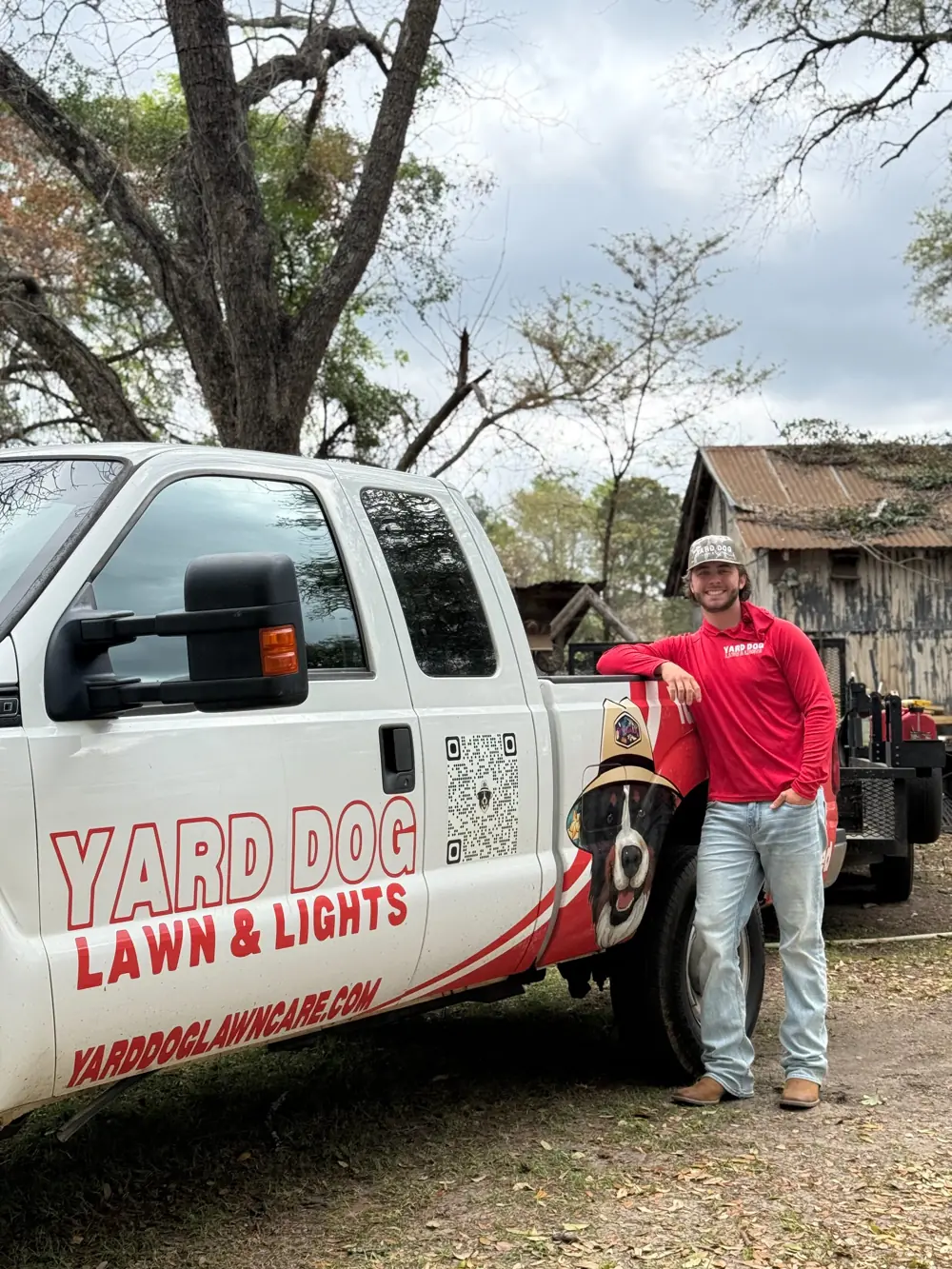
Miller Maines owns Yard Dog Landscapes in Longview, TX. He has worked East Texas yards since 2017 and still walks every property himself.