Why Fire Ants Explode in May (and What Actually Kills the Mound)
Every May the mounds show up overnight, all at once. There's a reason for the timing, and most people fight them the one way that doesn't actually shrink the colony.
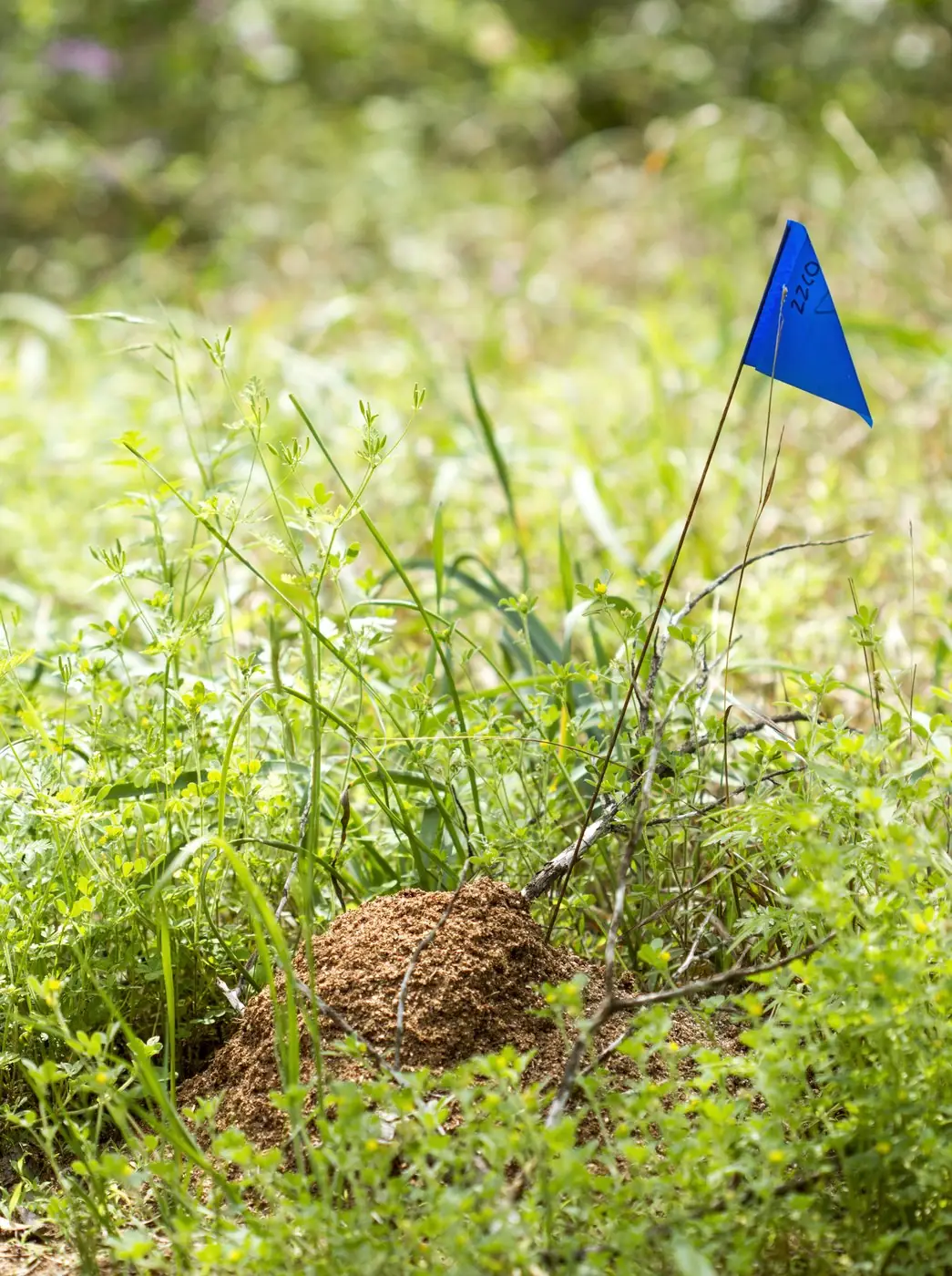
You walk the yard in late April and it's fine. Two weeks later there are eight mounds and the dog won't go in the back corner. It feels like they appeared out of nowhere.
They didn't. The colonies were there all winter, sitting deep where it was warm. May just gives them everything they were waiting for.
Why the mounds all show up at once.
Fire ants are a warm-soil insect. Through winter the colony drops down a couple feet to ride out the cold, and you barely see them. When spring soil temperatures climb into the 70s and we get our regular May rains, two things happen fast.
First, the colony pushes back up toward the surface and throws up that loose, fluffy mound to soak up warmth. Rain practically forces them up, which is why mounds seem to balloon the day after a storm. Second, the queen ramps egg-laying way up in spring, so the colony is growing as fast as it ever does.
So it's not that May creates the ants. May makes the ants you already had visible and active, all in the same two-week window. That's also what makes it the best time of year to hit them.
The mistake: only ever treating the mound you can see.
Almost everybody does the same thing. See a mound, dump something on it, watch it boil, feel like you won.
Here's the problem. A fire ant colony can run 200,000-plus ants with one or more queens living a foot or more underground. Pouring a contact killer on top kills the workers you can see and the queen usually survives. Worse, if you disturb the mound without killing the queen, the colony will often just pick up and move a few feet over. You didn't kill it. You relocated it.
And the mounds you can see are a fraction of what's out there. For every obvious mound, there are colonies in the yard with no visible mound at all. Spot-treating leaves all of those untouched.
What actually works: the Texas Two-Step.
This is the system the entomologists at Texas A&M have pushed for years, and it's what we use because it's the only thing that actually shrinks the ant population across a whole yard. It's two steps, and the order matters.
Step one: broadcast a bait over the whole yard. Not on the mounds. Everywhere. Bait works because the ants carry it down and feed it to the colony, including the queen, so it kills from the inside out, including the colonies you can't see. The catch is it's slow: a good bait takes a few weeks to bring a colony down because it has to be passed all the way to the queen. That's not a flaw, that's how it reaches her. Use a fresh bait (it goes rancid and the ants ignore it), put it out when the ground is dry and no rain's coming for a day or two, and ideally in the evening when they're actively foraging.
Step two: treat the few mounds you can't wait on individually. By the door, along the walk, where the kids play. For those, a mound drench or dust kills fast, within a day or two. You're not trying to get every mound this way, just the handful that are a problem right now while the bait does the heavy lifting on the rest.
What to do: bait the whole yard first for the colonies you'll never find, then knock out the urgent mounds by hand. Do it in that order and you hit the population, not just the eight mounds you happened to step on.
The two kinds of product that earn their place.
You don't need a shelf full of chemicals. You need one of each type.
- A slow-acting broadcast bait. The kind built around an insect growth regulator or a slow stomach poison the ants will actually carry home. This is the whole-yard step, and it's the one most people skip because it doesn't give the instant boil-up they want to see.
- A fast mound treatment. A drench or dust you apply to an individual mound for a quick kill on the ones you can't live with for three weeks.
Whatever you buy, read the label and follow the rate. More is not better with ant products. Overdo a bait and the ants avoid it; overdo a drench and you've just poisoned a patch of your own lawn for nothing.
Timing it right.
Two broadcast treatments a year does most of the work out here: once in late spring as the colonies surge, and once in early fall before they settle in for winter. Hit those two windows and you spend the rest of the year knocking out the occasional straggler instead of fighting an invasion every May.
If you'd rather not babysit bait schedules and mound drenches, that's part of what we handle on the properties we maintain around Longview, White Oak, Hallsville, Kilgore, and Gladewater. We stay ahead of the mounds so you're not finding them with your bare foot in July.
Miller Maines owns Yard Dog Landscapes in Longview, TX. He has worked East Texas yards since 2017 and still walks every property himself.