The Three Irrigation Mistakes That Cook East Texas Lawns
The sprinklers run every single day, the water bill proves it, and the lawn still looks rough by mid-July. Nine times out of ten it's one of three things, and all three are fixable in a weekend.
I walk a lot of yards around Longview with irrigation systems the homeowner is genuinely proud of. Controller in the garage, eight zones, runs like clockwork. And the lawn still has crispy patches, fungus circles, or that tired gray-green look by the middle of summer.
Here's the uncomfortable truth: a sprinkler system doesn't water your lawn correctly just because it turns on. Most systems I see are working against the grass, not for it. It's almost always one of these three mistakes.
Mistake one: watering at the wrong time of day.
Evening watering feels efficient. It's cooler, the sun's down, less evaporation, right?
Wrong move out here. Water that goes down at 8 PM sits on the grass blades all night, and warm, wet, dark conditions are exactly what fungus wants. A lot of the brown patch I get called about in summer isn't drought at all. It's a lawn being tucked in wet every single night.
Midday is the other bad window, and that one really is evaporation. In a Texas July you can lose a meaningful share of your water to the air before it soaks in, and spraying in 15 mph afternoon gusts means part of your zone is watering the neighbor's driveway.
What to do instead: set the controller to finish right around sunrise. Starting zones in the 4 to 6 AM range means the lawn drinks before the heat, and the morning sun dries the blades off fast, so fungus never gets its window. If you've been watering at night and fighting mystery brown circles, this one change may be your whole fix.
Mistake two: a little water every day instead of a deep soak twice a week.
This is the most common schedule I see: every zone, 10 or 15 minutes, every single morning. It feels responsible. It's actually training your grass to be weak.
Fifteen minutes wets the top inch of soil and stops. So the roots stay in the top inch, because that's where the water lives. Then we hit a 100 degree week, that top inch turns to powder in an afternoon, and a lawn with one-inch roots has nothing underneath to drink from. That's why daily-watered lawns are often the first ones to cook.
Deep, infrequent watering does the opposite. Soak the soil several inches down and let it dry between waterings, and the roots chase the moisture down. A bermuda lawn with deep roots will shrug off a dry week that wrecks the shallow-rooted yard next door. Established lawns out here want about an inch of water a week in summer, delivered in two good soakings, not seven sips.
One East Texas catch: a lot of our soil has enough clay that it can't absorb a long runtime in one shot. If you run a zone 25 minutes and water is sheeting down the curb at minute 12, split it. Run every zone once, then repeat the whole cycle an hour later. Same water, twice the soak, zero runoff. Irrigation guys call it cycle and soak, and on clay it's the difference between watering your lawn and watering the street.
What to do instead: two deep waterings a week, finishing at sunrise, with runtimes split if you see runoff. New sod is the one exception. Fresh sod needs daily water while it roots in, so if you just had grass installed, follow the install schedule first and graduate to deep-and-infrequent once it's knitted down.
Mistake three: the broken head nobody's noticed in two years.
Here's a question: when did you last actually watch your system run? Not hear it. Watch it.
Almost nobody does, because the whole point of irrigation is that it runs while you sleep. Which means a tilted head can spray the fence for two years, a mower-clipped nozzle can dump its whole flow into one soggy circle, and a clogged screen can quietly starve the far corner of a zone. You never see any of it. You just see the result: one stubborn brown patch that never recovers no matter how much you water, right next to grass that's doing fine.
If part of your lawn stays brown while the rest looks good, stop guessing and stop adding minutes to the controller. Adding runtime to a zone with a broken head just drowns the good areas while the dead spot stays dead.
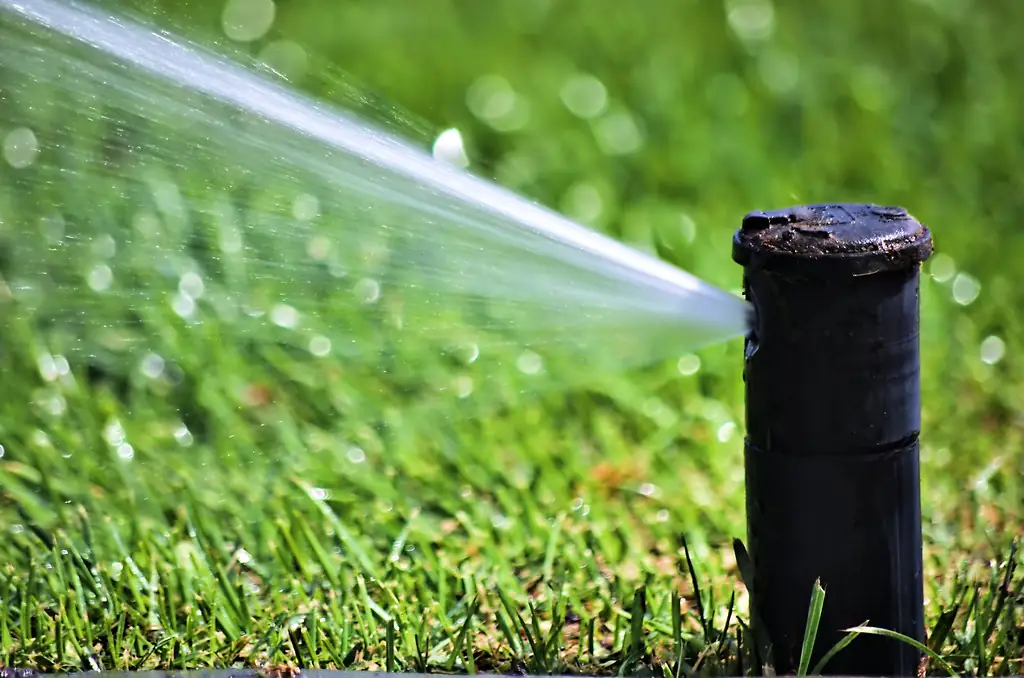
What to do instead: run a 20-minute audit twice a season. Turn each zone on manually in daylight and walk it while it runs. You're looking for heads that don't pop up fully, heads spraying concrete instead of grass, heads misting like the photo up top (that's high pressure wasting your water), and dry arcs where two heads don't quite reach each other. While you're at it, set out a few empty tuna cans across a zone and time how long it takes to collect half an inch. That number tells you exactly what your runtimes should be instead of guessing.
The pattern behind all three.
Notice none of these are about buying anything. The fix for almost every struggling irrigated lawn I see is timing, schedule, and a walk-through, in that order. The system you already own is probably capable of growing a great lawn. It's just been set up to do the opposite, and nobody's looked at it since the day it was installed.
We check irrigation coverage as part of the work we do on lawns all over Longview, Hallsville, White Oak, Kilgore, and Gladewater, and when a yard needs a system repaired, rerouted, or installed from scratch, we handle that too. If your sprinklers run faithfully and your lawn still looks cooked, something on this list is the reason.

Miller Maines owns Yard Dog Landscapes in Longview, TX. He has worked East Texas yards since 2017 and still walks every property himself.