How Much Mulch You Actually Need (It's Less Than You Think)
Every calculator online tells you 3 inches. We do 1 to 1.5. The beds look better, the weeds stay down, and you don't suffocate your plants.
Walk into any landscape supply yard around here and ask how much mulch you need. They'll punch the numbers into a calculator and tell you to buy three inches of coverage.
For a 2,000 square foot bed, that comes out to almost 19 yards. At $40 a yard, you just spent $760 on mulch.
The number is wrong. Or at least, it's wrong for East Texas.
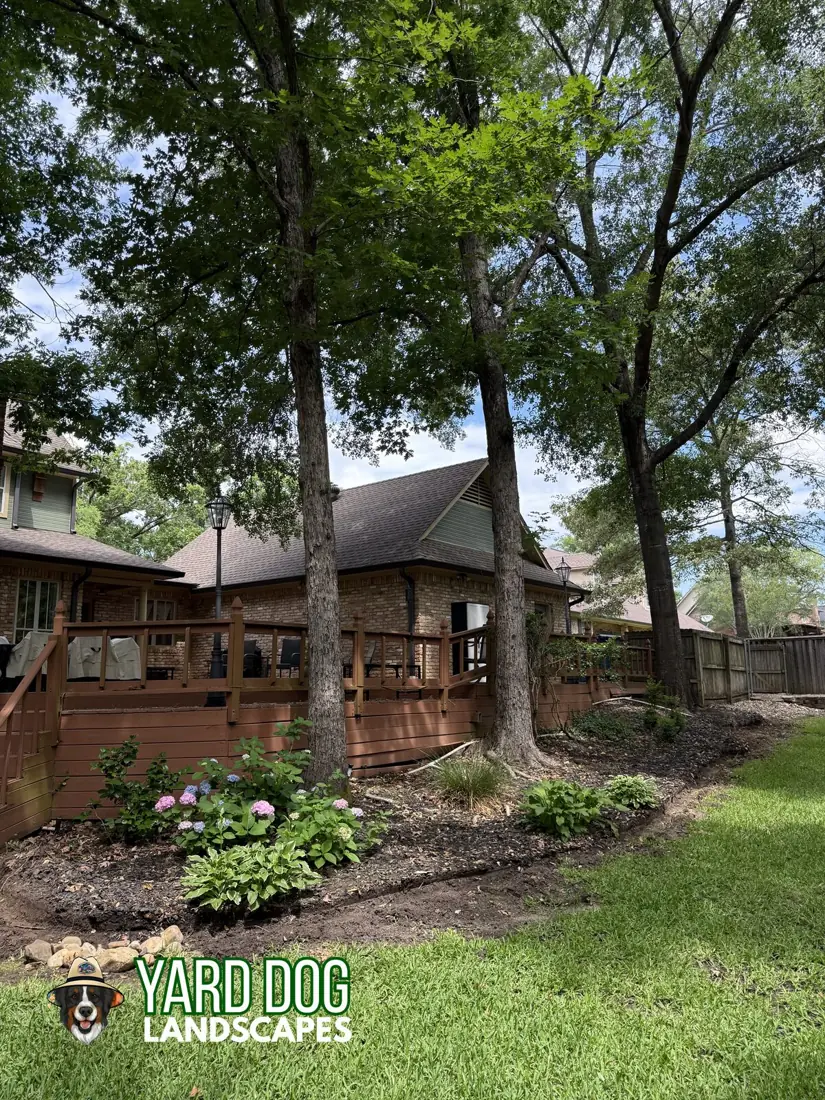
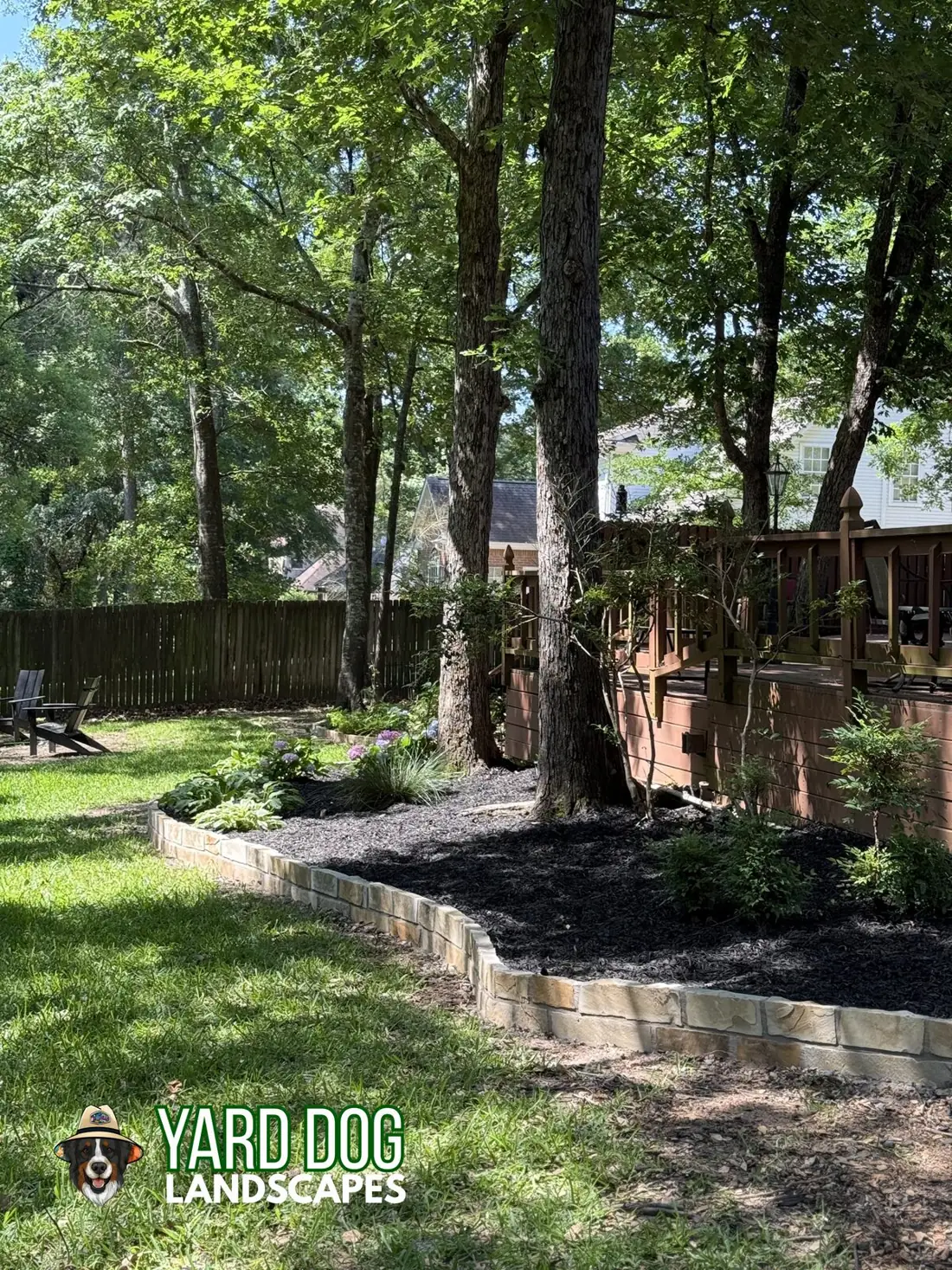
What we actually install: 1 to 1.5 inches.
I've installed mulch on hundreds of beds across Gregg and Harrison county. Residential, commercial, big estates, small front beds, we do them all at 1 to 1.5 inches over a clean prepped bed.
The beds look better. The plants live longer. The weeds don't come back any faster than the 3-inch beds, and we use about half the material.
The math: for fresh mulch over prepped soil, take your square footage and divide by 260. That's your yards. A 2,000 sqft bed needs about 8 yards, not 19.
Why 3 inches is actively bad.
Three inches doesn't just waste your money. It hurts the beds.
It waterproofs the bed. Three inches of mulch sheds water like a tarp. Light rain doesn't penetrate. The plants underneath get dry while the top of the mulch looks wet. People then water the surface, the surface holds the water, fungus moves in, and the plants slowly drown above ground and starve below.
It cooks the crown. A 3-inch pile of dark mulch sitting against a plant's crown holds heat and moisture against the stem. That's how stem rot starts. You'll see it most on roses, hollies, and azaleas, where plants die from the base and people blame the heat.
It traps voles. Three inches is enough cover for voles to tunnel under all winter long, eating the roots of every plant in the bed. By the time you notice, half the bed is dead and you can't figure out why.
It's wasted money. The visual effect of mulch, the dark, clean, finished look, happens in the first inch. Inches 2 and 3 are buried. You can't see them. They're not doing anything you'd pay for.
The big-box-store conspiracy isn't a conspiracy.
It's not nefarious. The 3-inch rule originated somewhere up north where mulch gets compressed by snow and decomposes faster in shorter growing seasons. By spring, three inches has settled to two and broken down to one. They need the extra to last the year.
We don't get snow loads. Our mulch decomposes about half as fast as it does in Ohio. One inch of fresh mulch in May still looks fresh by October down here. The math from up north doesn't translate.
What we do before we mulch.
The reason 1.5 inches works is that we prep the bed first. That's the half of the job most people skip.
- Pull every weed. By the root, not just the top. Mulch doesn't kill weeds, it hides them. If they're there when you cover them, they're coming back through.
- Edge the bed. Clean line between bed and grass. Without it, the mulch migrates into the lawn and the lawn migrates into the bed within a month.
- Lightly turn the soil. Compacted soil under mulch is where the trouble starts. Loosen the top inch so water can actually get to the roots.
Do all four, then put 1 to 1.5 inches on top. The bed will look better than a 3-inch bed that skipped the prep, every time.
When to mulch.
Best window in East Texas is late April through mid-May, right after the spring growth flush. Get ahead of the worst weed pressure, lock in moisture before the heat shows up, and the bed coasts through summer.
Second window is October. Pull old weeds, lay a thin top-dress, and it'll hold through winter and into next spring.
If we mulch your beds, this is how we do it. Right amount, right prep, right time of year. If you'd rather do it yourself, now you've got the same math we use.

Miller Maines owns Yard Dog Landscapes in Longview, TX. He has worked East Texas yards since 2017 and still walks every property himself.