Why Mowing Shorter in Summer Backfires
Every July I hear the same logic standing on somebody's front lawn: "If I scalp it real short, I won't have to mow again for two weeks." Makes sense on paper. It's also the fastest way to cook a lawn in an East Texas summer, and I can usually spot a scalped one from the road.
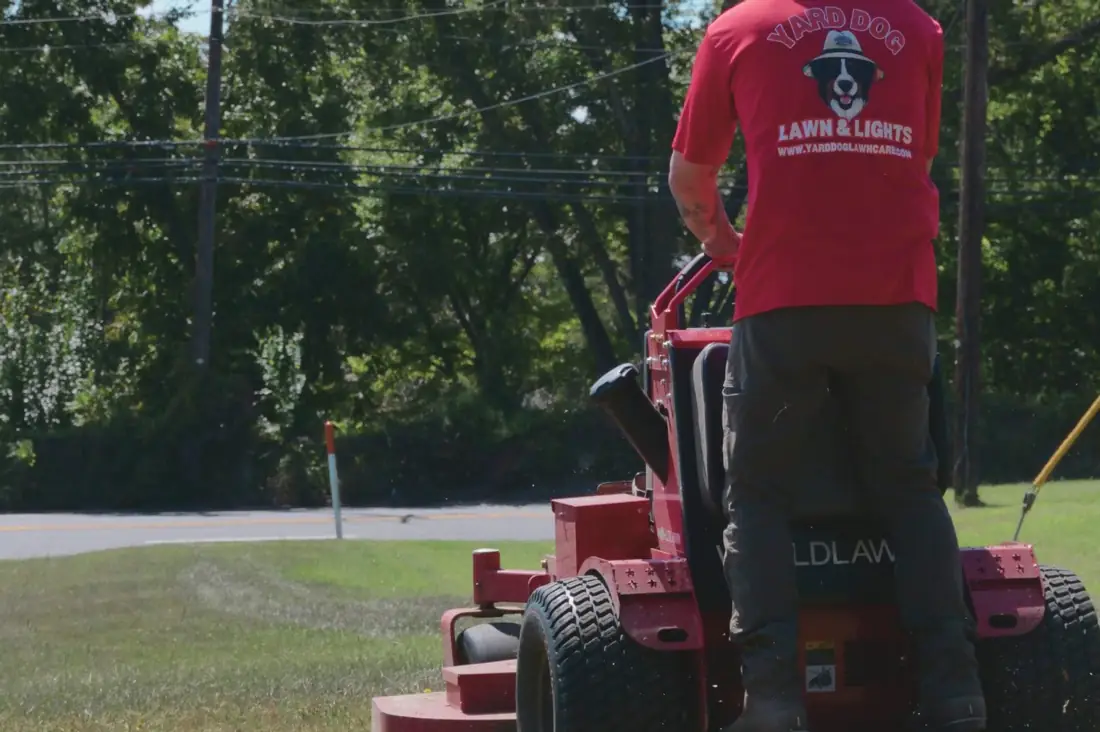
Mowing height is the single most powerful lever you have over a lawn, and it's the one homeowners get backwards most often. The instinct in summer is to cut lower so you mow less. In our climate that instinct is exactly wrong, and once you understand why, you'll never scalp a July lawn again.
Short grass grows short roots, and short roots can't survive a Gregg County July.
Here's the piece almost nobody knows: a plant balances what's above the soil with what's below it. The taller you keep the blade, the deeper the roots run. Scalp the top down to an inch and the roots retreat to match it.
Now put that shallow-rooted lawn on our heavy clay in a 100-degree week. The top inch of soil bakes bone-dry by early afternoon, and a lawn with one-inch roots has nothing underneath to pull from. That's why the shortest-mowed yards on the street are always the first ones to go crispy. They cut themselves off from their own water.
What to do instead: think of every extra half-inch of blade height in summer as buying yourself another inch of root depth and another day of drought before the lawn even notices. Height is free drought insurance.
Every notch you drop is an open door for crabgrass.
A tall, dense stand of grass does something you can't buy in a bag: it shades the soil. Crabgrass and most summer weed seeds need sunlight hitting bare dirt to wake up and germinate. Keep a thick canopy over the soil and those seeds stay dormant, because they never get the light signal.
Scalp the lawn and you flip that switch. Now you've got sunlight baking exposed dirt between thin grass plants, which is the precise condition crabgrass has been waiting for all spring. I get calls every August about crabgrass taking over, and a good share of those lawns weren't invaded so much as invited, one low mow at a time.
What to do instead: mowing tall is your first and cheapest line of weed defense, and it costs nothing but a deck adjustment. A shaded soil surface is a weed seed that never sprouts.
The scalping spiral is how one bad mow turns into five.
There's an old rule that holds up: never cut off more than a third of the grass blade in a single mow. Take off more than that and you shock the plant. It browns out to that pale straw color, and instead of growing roots it has to burn stored energy just to rebuild the leaf you took.
Here's how the spiral starts. You let it get tall, then scalp it short to "reset" it. It browns and thins. A thin lawn lets in weeds and looks ragged, so you cut it shorter again to clean up the look. Thinner still, more weeds, weaker roots. Each pass digs the hole deeper, and by late summer you've got more dirt and crabgrass than turf.
What to do instead: mow often enough that you're only ever taking the top third off. In peak growing weather that usually means every five to seven days, not every two weeks. Frequent light mowing keeps the lawn out of the spiral entirely.
Bermuda wants it low, but "low" in July is taller than you think.
Bermuda is a sun-loving, low-growing grass, and it handles a short cut better than anything else we grow out here. That's true, and it's where people get tripped up. The golf-course bermuda you're picturing is cut with a reel mower on dead-level ground. Your yard is a rotary mower on lumpy East Texas clay, and on uneven ground a low deck catches every high spot and scalps it.
In spring you can run bermuda in the one to one-and-a-half inch range and it looks sharp. In the heat of July, raise it. A bermuda lawn held around two to two-and-a-half inches keeps more leaf working, drives deeper roots, and shades out the crabgrass trying to move in. It'll be greener through a dry spell than the neighbor scalping his to the dirt.
What to do instead: set a rotary-mowed bermuda lawn to about two to two-and-a-half inches for the summer, and save the low cuts for spring and fall.
St. Augustine is the opposite, and mowing it short will flat-out kill it.
This is where the same-deck-for-every-yard habit does real damage. St. Augustine is a coarse grass that spreads by runners across the top of the soil, and it lives or dies by its leaf area. It should never drop below three inches, and through an East Texas summer it wants three-and-a-half to four.
Cut St. Augustine down to two inches and you've scalped the runners themselves, exposed them to full sun, and stripped away the shade the plant needs to keep its own soil cool. It fries. And St. Augustine is usually the grass in the shadier, tougher parts of the yard to begin with, the spots that need every bit of canopy they've got. Mowing it like bermuda is one of the surest ways to open a bare patch you'll be fighting the rest of the season.
What to do instead: hold St. Augustine at three-and-a-half to four inches all summer, and if your yard runs both grasses, mow them at different heights rather than splitting the difference.
A few habits that keep either grass out of trouble.
Keep the blade sharp. A dull blade tears the grass instead of slicing it, leaving frayed white tips that brown out and give disease an easy way in. Sharpen it a couple times a season.
Leave the clippings on the lawn when they're dry. They break down fast and hand a little free nitrogen and moisture back to the soil. Bagging is only worth it when the grass was diseased or so overgrown it's clumping.
And mow in the cool of the morning or the evening, not in the mid-afternoon oven. Cutting is a wound, and the grass recovers far better when it isn't also fighting peak heat.
None of this costs a dime or a trip to the store. It's just height, timing, and a sharp blade. We mow lawns on exactly these settings every week across Longview, Hallsville, White Oak, Kilgore, and Gladewater, and if you'd rather hand off the deck-height guesswork and just have it done right, that's what we're here for.
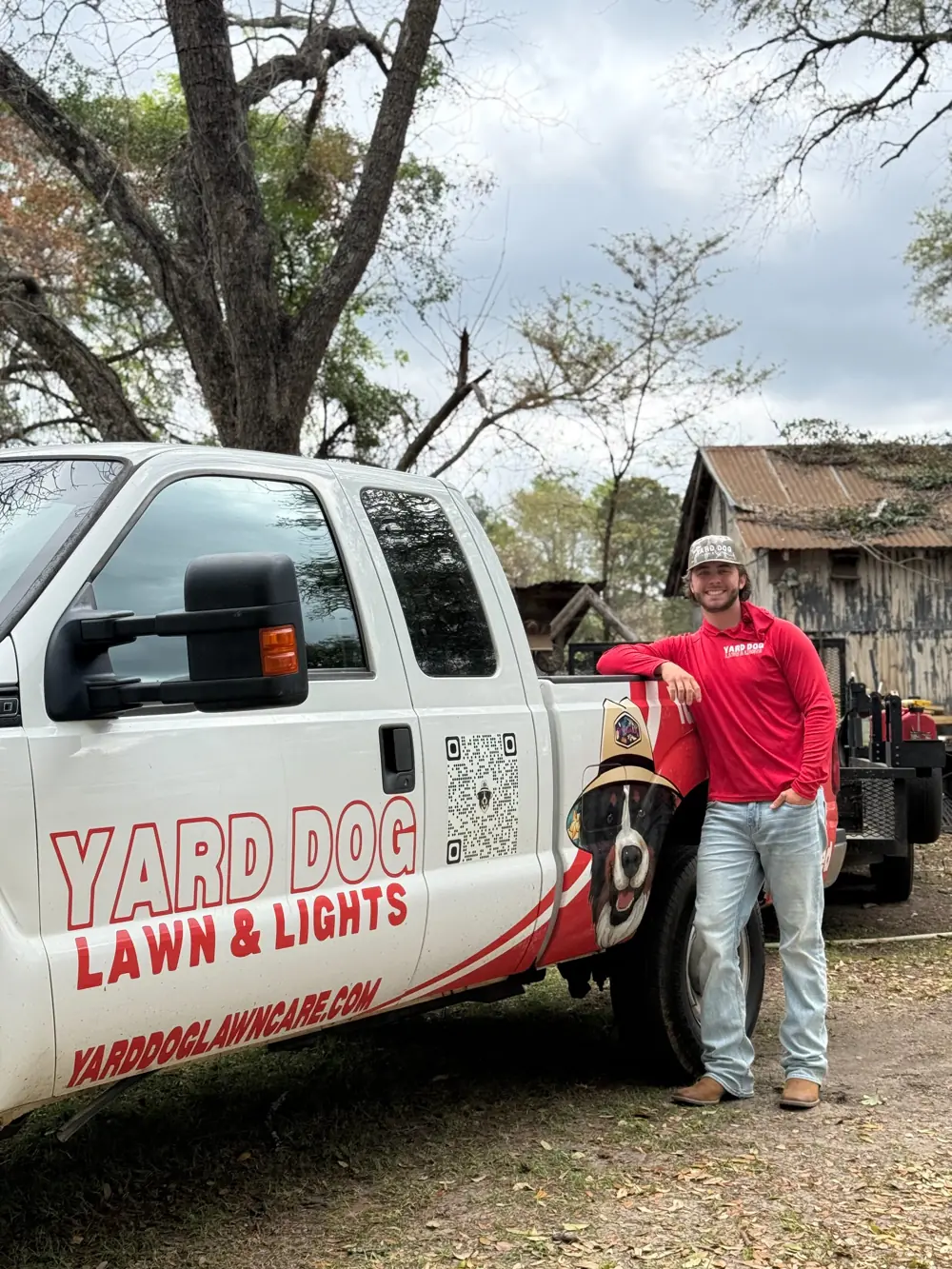
Miller Maines owns Yard Dog Landscapes in Longview, TX. He has worked East Texas yards since 2017 and still walks every property himself.