
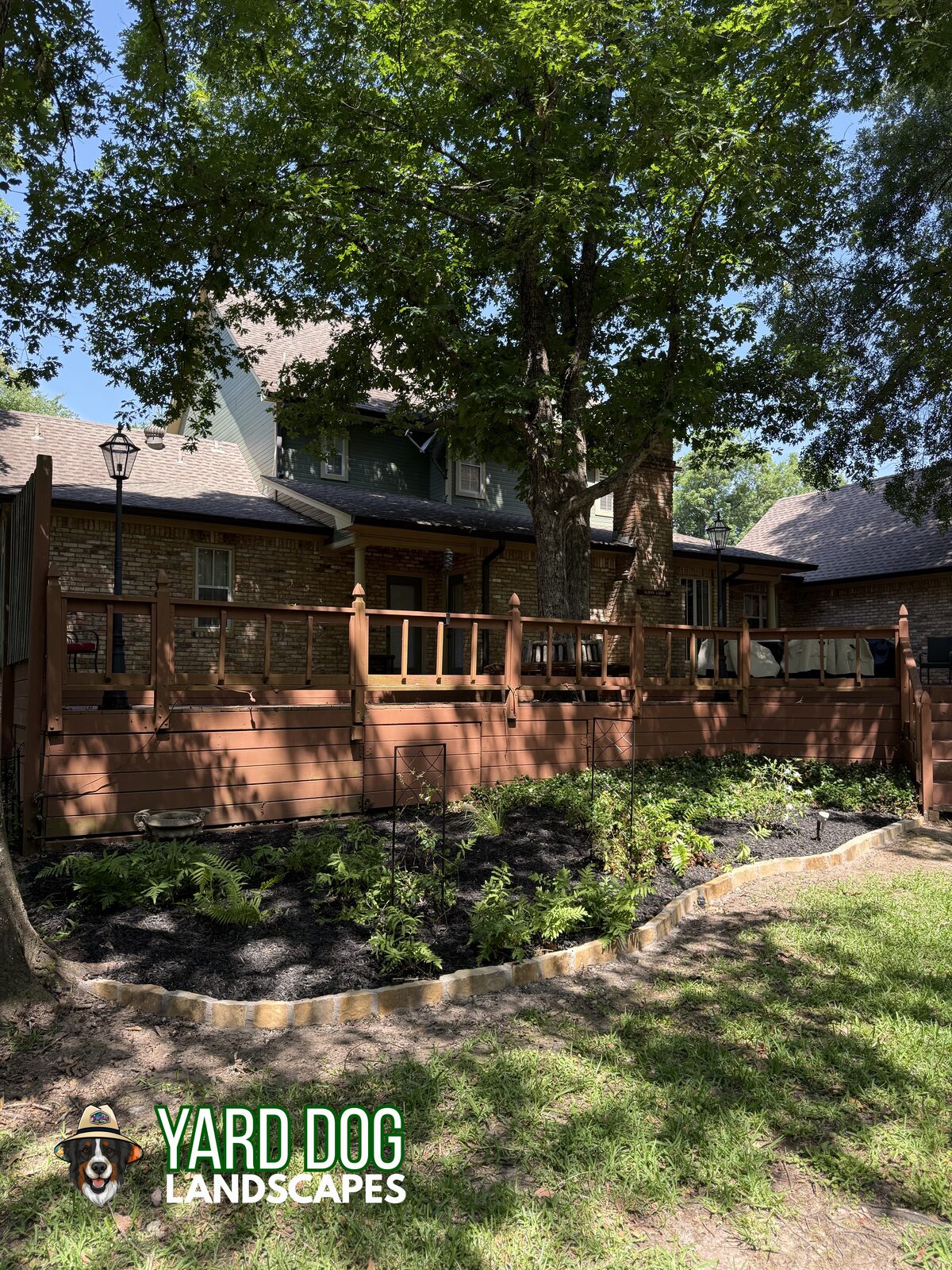
Longview sits in USDA zone 8b, meaning our average coldest night runs between 15 and 20 degrees. Almost everything sold as a landscape plant at a reputable Gregg County nursery is rated to take that without help. The plants that are not rated for it are usually in pots, and that is not an accident.
It helps to know which cold is coming. The first is usually a radiational frost: a clear, still night at 30 or 31 with heat radiating off the ground into an empty sky. That is the night a cover does something. A hard freeze is 25 degrees behind a stiff north wind for eight hours, and a cover does close to nothing then, because there is no still air to trap.
Most of what people cover does not need covering.
Every year I watch people throw sheets over azaleas, hollies, boxwoods, nandinas, loropetalum, and crepe myrtles. All of those are hardy well below anything a normal November produces here.
Covering cool-season annuals backfires outright. Pansies, violas, snapdragons, dianthus, and ornamental kale want cold, and a frost deepens their color. Throw a sheet over them and you trap moisture against the crowns, which is how you rot a bed that would have been fine. The lawn needs nothing either. The first freeze is part of the dormancy signal.
The short list worth protecting: potted citrus, particularly Meyer lemon and satsuma, which take damage in the mid 20s. Container tropicals like hibiscus and mandevilla. A sago or windmill palm planted in the last year or two, before the crown is established. And anything you put in the ground in the last six weeks, because those roots cannot yet pull heat from any real volume of soil.
What to do instead: move the pots, do not cover them. A container has no soil mass to buffer cold, and the roots freeze before the foliage. Garage is best, or group them tight against the east wall under the eave. If you do cover something in the ground, use frost cloth, run it to the soil on every side so it traps ground heat, and anchor it with bricks. Do not tie it around the trunk like a lollipop, which seals off the only heat source. Keep plastic off foliage, and pull the cover by mid morning.
A deep watering the day before does more than any sheet you own.
This is the part almost nobody does, and it is the most useful thing on the list. Moist soil holds and conducts far more heat than dry soil. A bed soaked the day before absorbs sun all afternoon and radiates it back overnight, holding the air at the surface a couple of degrees warmer than the bed next to it.
The second reason matters more for shrubs and young trees. Cold arrives here behind a dry, windy front that pulls moisture out of evergreen foliage all night while the roots sit in cold soil and cannot keep up. Most of what gets called freeze burn on hollies and ligustrum in December is really desiccation.
What to do instead: water deeply the morning before the freeze, so the soil has the afternoon to warm. Beds, the base of young trees, anything evergreen. Do not water the night of, and do not leave a sprinkler running through a freeze hoping the ice insulates something. That just gets you ice-loaded branches that snap.
The irrigation shutdown is where skipping a step costs real money.
The vulnerable part of a Texas system is not the buried pipe, which sits below frost depth and is fine. It is the backflow preventer standing above ground, usually a pressure vacuum breaker on a riser near the meter: a brass body full of standing water with nothing between it and the air. Water expands when it freezes, the bonnet is the weak point, and it splits. Backflow work is TCEQ licensed in Texas, so that repair is a licensed irrigator plus parts. An insulated cover is about ten dollars.
The order matters. Put the controller in the off or rain position instead of unplugging it, so your programs survive the winter. Close the main isolation valve, usually in a box near the meter. With the main closed, run each zone manually a few seconds to relieve pressure. Drain the backflow assembly by opening the test cocks and the bleeder screws underneath a quarter turn, and leave them cracked all winter. Open the manual mainline drains if you have them. Then wrap it, but do not seal the vent openings with foam, because the assembly has to breathe.
While you are out there, pull every hose off every spigot. A connected hose traps water in the bib, and a frozen bib often splits on the pipe inside the wall. That is a plumber and a hole in your sheetrock instead of a two dollar foam cover.
What to do instead: do the shutdown now, on a mild afternoon, instead of at 9 p.m. with a freeze warning running and a flashlight in your teeth. If the system has a pump, or you cannot find the isolation valve, get a licensed irrigator out before the front.
Leave the pruners in the shed until February.
The week before the first freeze is the worst time to cut a woody plant. A pruning cut tells the plant to push growth from the buds behind it, and soft November growth has not hardened off and gets killed outright. Hold off on crepe myrtles, roses, fig, althea, and vitex. All of those wait until mid February here.
The bigger mistake is pruning spring bloomers. Azaleas, mophead hydrangeas, spirea, forsythia, and loropetalum set next spring's buds on wood they already grew this year. Shear them now and you are cutting the flowers off. Those get pruned right after they bloom.
Same logic on perennials. Leave salvia, lantana, and ornamental grass tops standing. The dead growth is insulation over the crown, which is the part that has to survive. When the freeze blackens the lantana, leave it. January will almost certainly be colder than November anyway.
Oaks are the one exception, and they run the other direction. Texas A&M AgriLife advises against pruning oaks February through June, because that is when the beetles that spread oak wilt are active and fresh cuts draw them in. East Texas has plenty of oak wilt, so November through January is the right window for oak work.
We handle this work on properties across Longview, Hallsville, White Oak, Kilgore, and Gladewater, and this is the week for it. If you want someone to sort out what is genuinely tender, drain the irrigation and wrap the backflow right, and get oak pruning done inside the window, call us before the front gets here.