
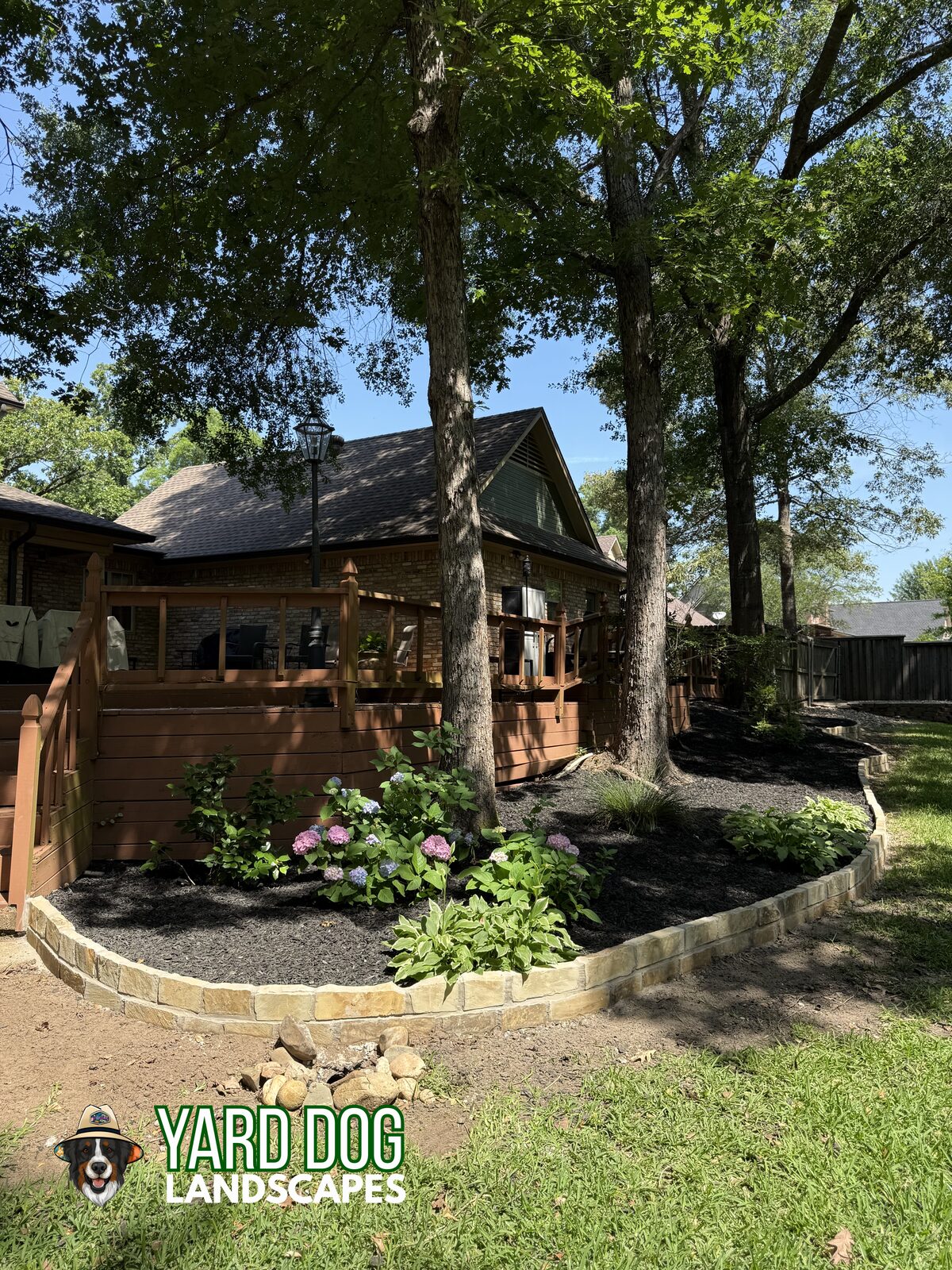
I get the same call every June. A homeowner cleaned up the yard over a long weekend, ran the trimmer over everything that looked shaggy, and now half the beds look great and the other half just sit there green and flowerless the rest of the summer. They did the same work to every plant. The plants paid them back very differently.
The reason is simple once you know it. Some shrubs bloom on wood they grow this year, so a trim only makes them branch out and flower harder. Others set next year's flower buds on this year's stems within weeks of finishing their show, so a late cut throws those buds in the green-waste bag. June is right on the line where that difference matters most. Here's how it breaks down on the plants we see in almost every East Texas yard.
Hydrangeas are the plant a June trim is most likely to ruin.
If you grow the classic big mophead hydrangeas, the blue and pink ones everybody wants, those bloom on old wood. That means the stems standing in your bed right now already carry next spring's flower buds near their tips. Cut them back hard in late summer, fall, or early spring to tidy the shape, and you get a healthy green bush with almost no flowers. I've watched homeowners do this two years running and blame the soil.
The only safe window to shape a mophead is the few weeks right after it finishes blooming, which out here lands in June and early July. After that you're cutting into buds you can't see yet.
What to do instead: if a mophead hydrangea needs shaping, do it now, right after the flowers fade, and keep it light. Take out dead canes and shorten the longest stems, then stop. If you've got the cone-shaped white hydrangeas (panicle types) or the big snowball Annabelles instead, those bloom on new wood and play by the opposite rule, so save their hard cut for late winter.
Azaleas have a hard June deadline most people miss.
Azaleas are everywhere in East Texas, and they run on the same old-wood clock as mopheads, just earlier. They finish flowering in spring and then immediately start building next spring's buds during the early summer heat.
That gives you a tight window. Prune within a few weeks of the last blooms dropping and the plant has all summer to set fresh buds. Wait until July or August to finally get around to it and you are literally clipping off next year's flowers, which is why so many sheared azalea hedges out here are all leaf and no color.
What to do instead: if your azaleas just finished and you haven't touched them, early-to-mid June is your last clean shot. Shape them now. If it's already deep summer by the time you read this, leave them alone and put it on the calendar for right after they bloom next spring.
Crepe myrtles actually want a light June touch.
Crepe myrtles are the opposite story, and they're the one people get backwards in the other direction. They bloom on new growth, this season's wood, so a summer trim can't cost you flowers. It can do the reverse.
When the first round of blooms fades into those little brown seed pods, snipping the spent clusters off the tips tells the tree to push a fresh flush of growth, and that new growth brings a second wave of bloom. On a healthy crepe myrtle here you can ride that into a long stretch of summer color.
What June is not is the time for the brutal knock-it-down-to-knuckles topping you see all over town. That heavy cut belongs in late winter when the tree is dormant, and honestly it does more harm than good even then. It is not a summer job at all.
What to do instead: deadhead spent blooms through the summer and pull any sucker shoots coming up from the base. Leave the structure and the trunks alone until winter.
Hollies are fine to shape now, with one catch.
Hollies, including the yaupons and the dwarf yaupons we plant constantly, are forgiving. The spring flush of soft new growth has hardened off by June, so this is a good clean window to shear them back into shape without the cuts pushing a bunch of tender growth right into the worst of the heat.
The one catch is berries. Those red winter berries grow from the spring flowers, so a hard shearing now trims off some of what would have colored up in December. If you don't care about berries, shear away. If you keep a holly specifically for winter color, go lighter and accept a slightly looser shape.
What to do instead: shape hollies in June rather than waiting for fall. A late-season shearing forces tender new growth that the first hard cold snap will burn brown, and then you're staring at scorched tips all winter.
The one thing you should not put a saw to right now is your oaks.
This one isn't about flowers, it's about keeping the tree alive. East Texas is oak country, and we have oak wilt. The fungus spreads partly through beetles that are drawn to the fresh sap of a pruning cut, and those beetles are most active through the spring and early summer. A June cut on a red oak or live oak is an open invitation.
The safe window to prune oaks here is the dead of winter or the heat of late summer, not now. The only exception is a storm-broken limb that has to come off for safety, and even then the cut should get sealed right away.
What to do instead: leave healthy oaks alone until they're fully dormant in the cold months. If a limb is genuinely hazardous, paint the wound with pruning sealer the moment it's cut, which is the one case where sealing a cut actually helps.
The rule underneath all of it.
You don't have to memorize a chart. Just ask one question before the trimmer comes out: does this plant bloom on old growth or new growth? Old-growth bloomers like hydrangeas and azaleas get pruned right after they flower and never later. New-growth bloomers like crepe myrtles can take a summer touch-up that earns you more flowers. And oaks get left out of the summer entirely.
Get that one distinction right and you stop accidentally trading a season of color for a tidy weekend.
We handle pruning and hedge trimming on this schedule for yards all over Longview, Hallsville, White Oak, Kilgore, and Gladewater, timed to each plant instead of all at once on whatever Saturday the homeowner had free. If you're not sure which of your shrubs are about to lose their buds to the wrong cut, that's exactly the kind of thing we sort out on a walk-through.