Winter Color Still Goes In This Month: Pansies, Violas, and Dianthus in East Texas
October is the best time to plant winter color in East Texas, but early November is not too late. Pansies, violas, and dianthus planted now still have time to root in before the cold sets in. The thing that decides whether they last is not the plant you pick. It is how well the bed drains.
Cool-season annuals are the one planting job where the weather turns in your favor as the year gets colder. They want cool air, and our soil is still warm enough in early November that new roots take hold fast. That warm soil is the reason fall planting works better than waiting for spring.
The ideal window was October, so if you are reading this on the first weekend of November, do it now rather than later. Each week of delay is a week less root growth before the first hard freeze.
Pansies, violas, and dianthus are the safe choices.
Pansies and violas are the workhorses. They take freezes into the upper 20s, and on a frosty morning they will look flat and wilted, then perk right back up once the sun hits them. Violas are the smaller-flowered cousin, and they tend to keep blooming through a rough winter better than the big-faced pansies do.
Dianthus is the one I like for beds that people see every day. It stays low, holds its foliage in cold weather, and keeps coloring through winter. Snapdragons and ornamental cabbage or kale are good fillers for height and texture.
What to skip: anything sold as a spring annual that happens to be on the shelf. Marigolds, impatiens, and petunias will look fine for a week and then turn to mush at the first frost.
Drainage matters more than the plant.
Our clay holds water, and cool-season annuals rot in wet soil far faster than they freeze. A bed that stays soggy through a rainy December will lose plants no matter which variety you chose.
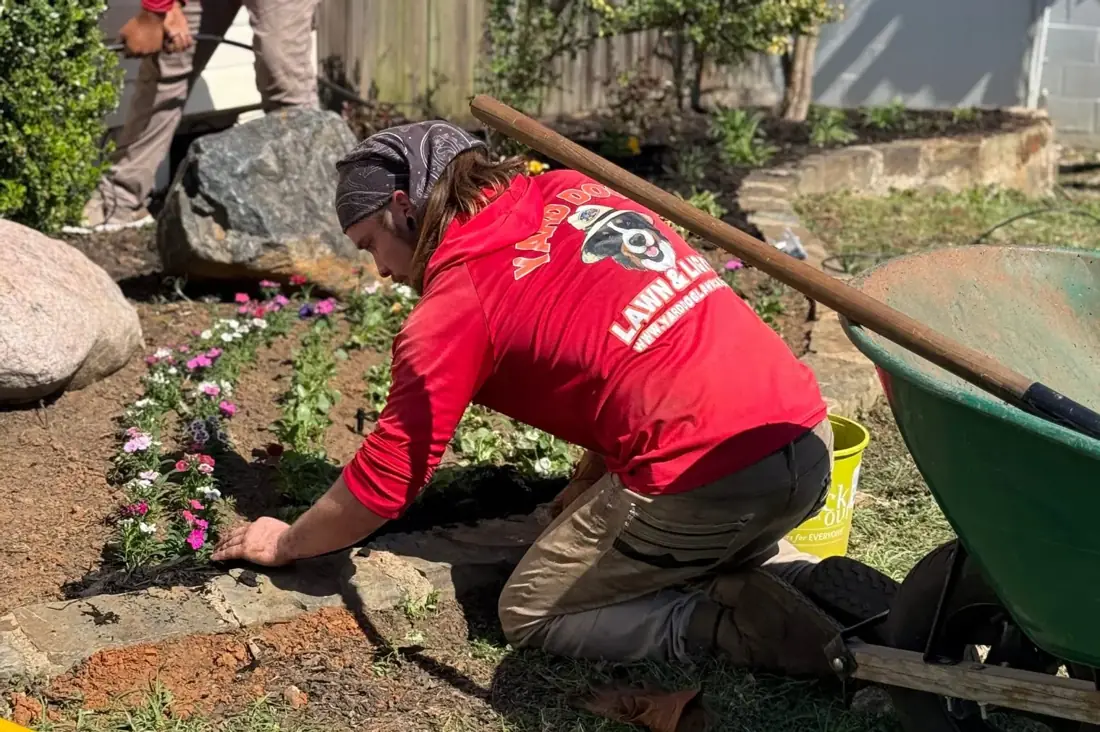
Before planting, work a few inches of compost or planting mix into the top of the bed and mound the soil a little so water runs off instead of pooling at the roots. If the bed sits in a low spot or against a downspout, fix that first. No amount of fertilizer makes up for roots sitting in water.
What to do: loosen the soil, work in compost, mound the bed slightly, and set the plants at the same depth they were growing in the pot. Water them in well at planting.
Water less than you think, and feed lightly.
Cool weather means slower water loss. After the first good soak, water when the top inch of soil is dry, not on a schedule. Overwatering in cold weather is the most common way winter color dies.
A light feeding at planting with a slow-release fertilizer is plenty. Heavy feeding pushes soft growth that does not hold up through a freeze, and the plants do not need it. Pinch off spent flowers as you walk by. Deadheading keeps pansies blooming instead of setting seed.
Mulch the bed, but keep it off the stems.
A thin layer of mulch holds moisture and moderates soil temperature, which helps new roots. Keep it pulled back from the crown of each plant, because mulch piled against the stem holds moisture right where rot starts.
If you are not sure how to time winter color around the first freeze, our first-freeze checklist covers what needs protecting and what does not. And if you would rather have a crew prep the bed and plant it, Yard Dog sets out winter color across Longview, Tyler, Kilgore, Gladewater, and the rest of East Texas.

Miller Maines owns Yard Dog Landscapes in Longview, TX. He has worked East Texas yards since 2017 and still walks every property himself.