Late August Is When You Set Up Your Fall Lawn, Not September
The fall lawn questions start hitting my phone the second week of September. By then, on half those yards, the useful part of the window has already closed.
Warm-season grass does not care what the calendar says. It runs on soil temperature and day length, and both are about to turn.
The soil under an East Texas lawn is still in the eighties and the grass is growing hard. What changes over the next three weeks is the nights. Lows slide from the upper seventies into the sixties, and the ground starts giving heat back overnight instead of holding it.
The cooling nights are the signal, and they get here before the days cool off.
Once nights drop, bermuda and St. Augustine stop spending everything on top growth and start pushing carbohydrate down into roots, rhizomes, and stolons. That is the point of fall work out here. Everything you do from now through October is aimed at the part of the plant you cannot see.
Longview's average first freeze lands in the middle of November, which leaves about eleven weeks of usable growing season. That sounds like plenty, but every recovery job on the list needs weeks of active growth on the back end, and the growth rate falls the whole time.
Aeration only pays if the grass has time to close the holes.
Core aeration belongs in the window where the grass can still heal itself, which here is late August through mid-September. Pull cores in late October and all you have done is open a few hundred holes for winter weed seed.
Most yards around here sit on tight clay that packs down under mowers and foot traffic. If the lawn puddles after an ordinary rain, or irrigation runs toward the driveway instead of soaking in, that is compaction. Sandier ground toward Kilgore packs less, but gate paths and dog runs still get it.
Two details decide whether it does anything. Pull cores, do not poke holes: a spike aerator shoves soil sideways and makes the compacted layer worse, while a core aerator gives the soil somewhere to move. And water the day before, because bone-dry August clay is close to concrete and the tines will skip. Leave the plugs where they fall.
What to do instead: if the lawn gets aerated once a year, book it in the next three weeks and put the feeding behind it.
The last real feeding goes down earlier than the bag on the shelf suggests.
The "winterizer" fertilizer stacked by the door in October is written for cool-season lawns in states where the grass keeps growing into December. Ours does not. A heavy shot of nitrogen late pushes soft top growth right before frost burns it off, money spent on leaves the plant is about to drop.
On St. Augustine it is worse than wasteful. Large patch, the fall face of brown patch, wakes up when nights fall into the sixties and the canopy stays damp overnight, which describes October here almost perfectly. Late nitrogen feeds it. I have seen a lawn fed in mid-October show yellow rings by November.
The rule I work by: the last meaningful nitrogen goes down four to six weeks ahead of the average first frost, and I would rather be two weeks early than one week late. A mid-November freeze puts the outside edge at the start of October, and in practice our last feeding lands in the first two weeks of September.
Potassium is different. A low-nitrogen, higher-potassium application in early October supports rooting and cold hardiness without pushing tender leaf growth. Whether your lawn needs it depends on what is already in the soil, and a soil test through the Gregg County AgriLife Extension office costs less than a bag of the wrong fertilizer.
What to do instead: put the last nitrogen down in early September, then treat October as a potassium-and-water month rather than a second feeding.
Overseeding here is a looks decision, not a lawn-health one.
This is where national fall lawn advice gets East Texas homeowners in trouble. "Overseed in the fall" is guidance for fescue country. Our lawns are warm season and do not work that way.
Bermuda seed needs warm soil and months of growing time to build rhizomes. Sow it in September and whatever germinates gets killed by the first freeze with nothing stored underground to come back from. Seeding bermuda is a late spring job. St. Augustine has no viable commercial seed at all, so it goes in as sod or plugs or not at all.
What people around here mean by fall overseeding is ryegrass for winter color. That works, and it is a straight trade. You get green from November into March, and you also get mowing and watering all winter, plus a stand of grass competing with your bermuda in April, right when it is trying to break dormancy. On a thin lawn that delay costs more than the color is worth.
What to do instead: skip winter ryegrass unless you want green through the holidays or need cover on a slope that is washing. Dormant tan is what a healthy bermuda lawn is supposed to look like in January.
Bare ground in August is a weed patch in February.
If this summer left open spots, and between grubs, armyworms, chinch bugs, and dog traffic most yards have a few, this is your last stretch to close them.
St. Augustine sod and plugs need four to six weeks of root growth before dormancy to knit into the soil. Laid in early September it roots and holds. Laid on the first of November it sits there like a rug, and the first hard cold snap lifts the edges. Bermuda will creep back across a small bare spot on its own while there is warmth and water.
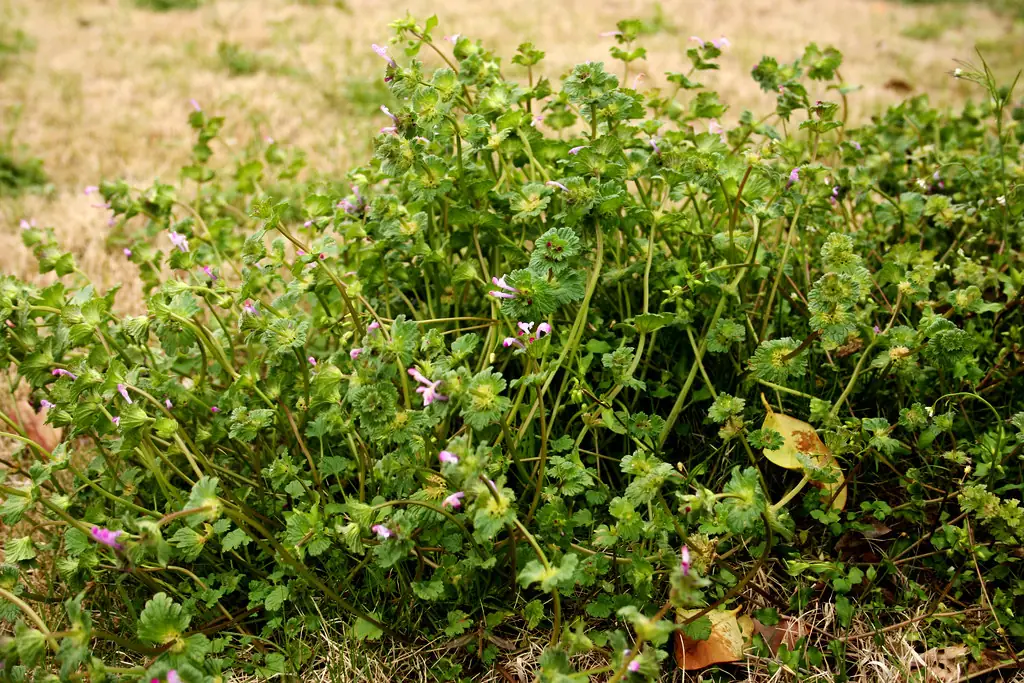
Every patch of open dirt is a seedbed. Henbit, chickweed, and annual bluegrass germinate as soil temperature falls through about seventy degrees, usually sometime in October, and they land where there is no turf to shade them out. That soil temperature, not a date, is what a fall pre-emergent keys off of too.
Here is the whole list for the next two weeks.
Mark the thin spots and the places that stay wet. Pull a soil sample and send it in, since results take a couple of weeks. Line up an aerator, water the day before, pull cores, leave the plugs. Put the last nitrogen down in early September. Get sod or plugs in the ground by the end of the month. Keep watering deep and infrequent through October, because roots keep growing after the top quits. None of it is dramatic, which is exactly why it gets skipped.
Every year we walk yards in Longview, Hallsville, White Oak, Kilgore, and Gladewater where the owner did everything right in May and then coasted from Labor Day on. The lawns that green up first in spring are the ones where somebody did the boring work in the last two weeks of August. If you are not sure whether yours needs aeration, a feeding, sod, or just to be left alone, we will walk it and tell you straight.

Miller Maines owns Yard Dog Landscapes in Longview, TX. He has worked East Texas yards since 2017 and still walks every property himself.