
Mulch is not paint. It is supposed to disappear, and in East Texas it disappears faster than almost anywhere, because heat and humidity are exactly what the organisms that break it down want.
Most of last spring's mulch is already gone, and that is what you paid for.
Lay shredded hardwood or pine bark two to three inches deep in March and April, and by September it is usually down to about an inch. Pine straw goes faster. Some of that is settling, but most of it is decomposition. The bottom of the layer has been turning into dark, crumbly organic matter and working its way into the top of the soil all summer.
That is the point of an organic mulch. Our native soil is heavy clay, or sandy loam sitting on clay, and organic matter is what loosens it, helps it drain, and gives roots something to grow into. Every year a bed gets mulched, the top few inches get a little better.
So when you pull a rake through a bed in fall and see soil showing through, the mulch did not fail. It did its job.
Stripping a bed to bare dirt throws away the best part.
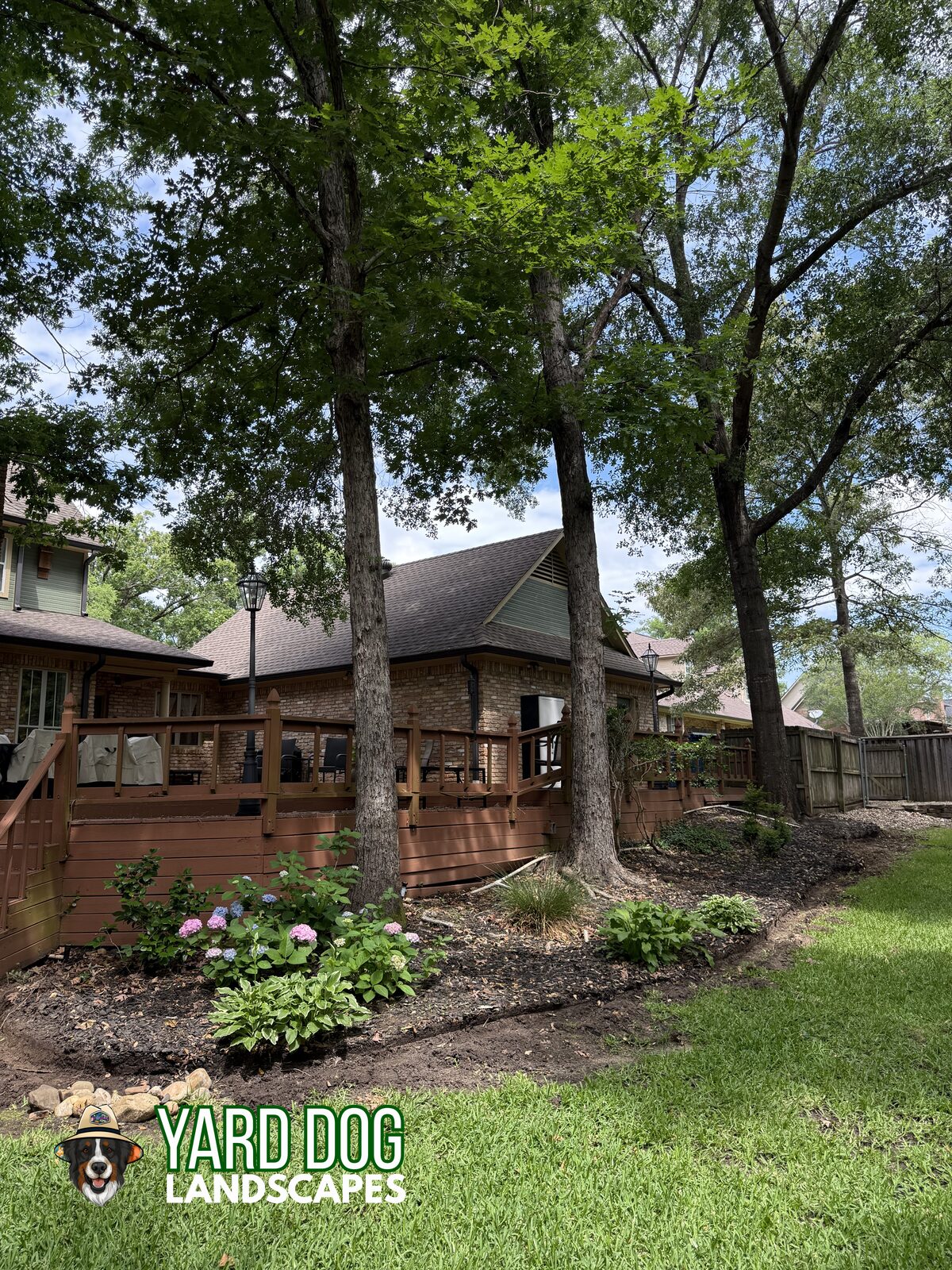
Hauling out old mulch to start fresh sounds tidy. What actually comes out is the layer that was halfway to becoming soil, plus a good share of the fine feeder roots your shrubs sent up into it. Azaleas, hydrangeas, and boxwood all root shallow, and they love that zone.
Then you pay to haul in new material, lay it three inches deep on top of soil that just lost its organic layer, and start the whole cycle over. It costs more, and the bed is worse off for a season.
What to do instead: leave the old layer in place. Rake it loose where it has crusted, pull any weeds by hand, and add new mulch only where it is needed to bring the total back to about two inches.
A fall top-dress is about an inch, not another three.
Here is how I size it. Push a finger down through the mulch until you hit soil. If you have an inch left, add an inch. If you have two, you probably do not need anything this year except touch-ups where the rain washed it thin along the edges.
An inch of fresh mulch goes a long way. It covers roughly three times the area of a three-inch reload for the same money, which is why a top-dress is usually a fraction of the cost of a full bed redo. We covered the depth math in more detail in how much mulch you actually need, and the short version still holds: more is not better.
Match what is already there. Hardwood over hardwood, pine bark over pine bark. It looks right the day it goes down and it breaks down evenly.
A winter mulch layer is insulation for roots, not decoration.
We do not get a frozen season here, but we do get swings. Seventy degrees on a Tuesday and twenty-two on Thursday night is a normal East Texas January. Bare soil follows those swings. Two inches of mulch flattens them out, so the root zone stays more even through the cold snaps.
It also holds water, which matters more than people expect in winter. Fall and early winter can run dry here, and most of the winter damage I see on shrubs is a dry root zone during a hard freeze, not the cold by itself. A mulched bed holds that moisture close.
And it protects the clay. A hard winter rain on bare clay seals the surface and runs off. The same rain on a mulched bed soaks in slowly and stays put.
What to do instead: get your top-dress down in late September or October, before the leaves drop and before the first cold front. That gives the layer time to settle and knit together ahead of winter.
Mulch piled against stems does more harm than no mulch at all.
You have seen the volcano: mulch mounded up around a tree trunk or packed against the base of a shrub. It happens a lot in fall, because every new layer goes on top of the last one and nobody pulls it back.
Bark is built to be dry. Keep it wet and it softens, rots, and opens the plant to disease. A deep pile also gives voles and other rodents a warm, hidden spot to chew bark all winter. On young trees we see roots start growing up into the mulch pile itself, where they dry out and circle the trunk.
What to do instead: keep mulch a few inches off shrub stems and a hand's width off tree trunks. Taper it down to nothing at the base. If you already have a volcano, pull it back this fall before adding anything new.
We top-dress and refresh beds all fall across Longview, Hallsville, White Oak, Kilgore, and Gladewater. If your beds look thin going into winter, give us a call. We will tell you honestly whether you need a top-dress, a touch-up, or nothing at all this year.