The Late-Summer Grub Damage That Peels Up Like Carpet
There's a brown patch that's been getting worse since the end of July. You've watered it, you've fed it, and it keeps spreading. Before you add another sprinkler cycle, grab a handful of that grass and pull.
Every August I get the same call. The lawn looked fine in June, it's been watered all summer, and now brown patches are spreading that no amount of water fixes. The homeowner has already blamed the heat.
Sometimes that's right. But when the grass in those patches lifts off the ground like a rolled-up rug, that isn't drought. That's white grubs, and August is when they do their worst work out here.
Grab the dead grass and pull. That settles it in ten seconds.
Healthy turf fights you. So does drought-stressed turf, even brown and crunchy, because the roots are still down there gripping soil.
Grub-damaged turf doesn't fight at all. The grubs chew roots right below the crown, so the grass loses its anchor. Pull steadily on a handful and the whole mat comes free in a sheet, bare dirt and chewed stubs underneath, no white root threads on the back of it. Turf on chewed roots also feels spongy underfoot, and that shows up before the color goes. It's the most reliable field test I know.
Drought stress and grub damage look the same from the porch and nothing alike up close.
Drought has a pattern. It hits the sunny slope first, then the strips along the driveway, then wherever soil is thinnest. Blades fold lengthwise, color goes gray-green before brown, and footprints stay pressed in behind you. Soak it and it perks up in a day.
Grub damage ignores all of that. The patches are irregular, unrelated to sun or slope, and visibly bigger week over week. Watering does nothing, because there are no roots left to drink with.
The part that fools people: grub damage often lands in the best-watered part of the yard. Female beetles lay in soil that's moist and workable, and in a dry East Texas summer your irrigated lawn is the only moist soil for a hundred yards.
What to do instead: run the tug test in three or four spots before you add a minute to the controller. More water on a rootless lawn just rots what's left.
The birds and the armadillos figure it out before you do.
Grackles and starlings working the same section of yard methodically, morning after morning, aren't pulling worms at random. The bigger tell is armadillos. They root at night, leave cone-shaped holes an inch or three across, and flip whole flaps of loose sod over. Skunks and raccoons peel it back in strips. Armadillos dig for earthworms too, so digging alone isn't proof, but a lawn torn up nightly in August that wasn't in June is telling you something.
Mid-August is when small grubs turn into a real problem.
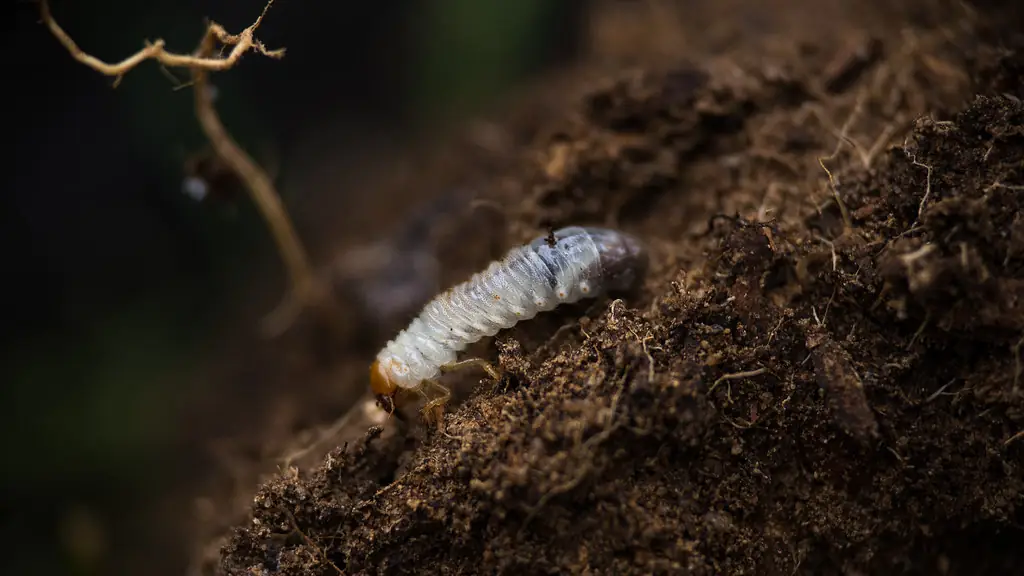
The calendar explains why this sneaks up on people. Those June bugs at your porch light in May and June are the adults. Females go into the soil in June and early July to lay, eggs hatch in two to three weeks, and through July the grubs are too small to notice.
By mid-August they're in their last larval stage, near full size, with the appetite to match. That's why a lawn goes from a little thin over there to peeling up in sheets inside of three weeks. Feeding runs into September and tapers as the soil cools in October.
Two local wrinkles. Heavy June bug flights in late spring are a fair warning for August pressure in that yard. And the sandy loam around Kilgore and west of Longview takes more egg-laying than heavy clay, because females can work it easily and it holds moisture.
Cut a square foot and count before you spend a dollar.
Take a spade, cut three sides of a one-foot square four inches deep, and peel the flap back like the cover of a book. Count the C-shaped grubs in the soil you just exposed.
Do it at the edge of a damaged area, not dead center. Grubs move on from turf they've already killed, so the middle of a dead patch comes up empty and talks you out of the right answer.
Then read the number honestly. One or two per square foot is normal, and nearly every lawn in Gregg County has some. Five or more in bermuda or St. Augustine is a real infestation, and a thin lawn shows damage at a lower count than a thick one. Set the flap back and water it.
One false alarm: green June beetle grubs are big and crawl on their backs across the driveway after a rain. They eat decaying matter more than living roots, so they mound soil instead of peeling turf.
With grub products, the timing is the whole game.
Preventive products, the ones built around chlorantraniliprole or the neonicotinoids, go down before or right around egg hatch and wait in the soil, which here means late May through early July. Put that same product out in September against full-grown grubs and you've bought lawn decoration.
Curative products like trichlorfon reach bigger larvae, but they don't linger, and they have to be watered in with about half an inch of water immediately or they never reach the feeding zone. Skipping that is the most common reason a treatment "didn't work."
One myth worth killing: milky spore targets Japanese beetle, which isn't established here. It does nothing to our June beetle and masked chafer grubs.
What to do instead: diagnose first, then match the calendar. Fat grubs and fresh damage in late August means a curative watered in right away still does something. Damage found in October isn't worth treating, since the feeding is over, so plan on a preventive next June. A licensed applicator can handle the application if you'd rather not.
Getting the lawn back is a watering problem more than a fertilizer problem.
Whatever grass survives a grub run has almost no root left. It can't pull water from three inches down, because there's nothing down there to pull with.
So for two or three weeks after the damage, this is the one time I'll tell an East Texas homeowner to water light and often: short cycles every day or two to keep the top inch damp while new roots form. Once it anchors again, go back to deep and infrequent.
Bermuda is the lucky one. It runs back over bare ground on stolons and rhizomes, and with September warmth, moisture, and a light feeding it will often close its own patches. St. Augustine only creeps in from the edges, so anything bigger than a couple of feet needs plugs or sod before dormancy, and a bare patch left open until spring grows weeds instead.
Every August we walk yards in Longview, Hallsville, White Oak, Kilgore, and Gladewater that the owner has written off as heat damage, and a good share roll up like carpet the first time we pull. Grubs and drought take different fixes, and picking wrong costs you the fall. If you can't tell which you've got, pull on it before you water it again.

Miller Maines owns Yard Dog Landscapes in Longview, TX. He has worked East Texas yards since 2017 and still walks every property himself.